Flying Lesson #2

Flying lesson #2 went much better. At least, I thought so. Glen said I looked more relaxed than last time and he never asked if I wanted to return to the airport.

I went through the pre-flight inspection myself and got most of it right, expect when I embarrassed myself by pointing to the flaps when it said fuselage. There are more parts to a plane than a person’s body.

We worked on taxiing. If you see a small Grumman wobbling like a drunk man, it’s me practicing how to go left and right on the ground. It made a big difference when I  pulled my seat up close enough to reach the top of the rudder. Still seems like a strange place to put brakes to me.

 My oratory skills are lacking – so much to learn – because instead of “Guthrie Airport, Grumman eight nine uniform,” I said, Grumman eight nine uniform Grumman.”  Oops. At least, I tried this time.

 Finally in the air, we practiced the same thing as the first lesson. Ascending, circles, and descending. Or as he wrote – climbs, glides and turns. Not smooth, and only messed up seriously a few times on the rudder. If he would have said left rudder when turning left, and right when turning right, that would have helped. Maybe he assumed any logical person would know that. Who said an accountant was logical? Or maybe he said it and I missed it during the trauma of the first lesson.

Glen added our first maneuver. “Maneuver” sounded a little scary, but we did ground tracking. Never heard that term before, but he said to circle the town of Crescent. Since he didn’t say which way, I assumed he meant a left circle since we had just circled right, so I lost sight of the darn town pretty quickly. Couldn’t see anything out the left side of the plane since I’m still sitting on the right side. I bull’s eyed city hall.

 We landed safely, and although he said to stay with him on the landing, I allowed him the privilege of being in control. As if he wasn’t all along.

Flying Lesson #1

Finally adding my first flight lesson to this blog. And a picture. It took me ten years to get up enough nerve to call a flight instructor. I scheduled Tuesday morning at Edmond Guthrie Regional Airport but the clouds were too low so we cancelled. Same for Wednesday. I was relieved. Then we rescheduled for the next available opening –  Thursday at 3 p.m. Around noon I came up with excuses to cancel. I felt nauseous. It was too hot. And of course, it was my mother’s birthday. I called my husband, Bill, and told him I might wait until next week. I hoped he’d say, “You’re right. It’s too hot.” But he said, “It’s your choice. Whatever you want to do.” Lot of help he was.

 A pitch-hitter flight training course is for those of us who don’t want to be a pilot unless we have to. Since I fly with Bill several times a month and hopefully we’ll fly many more years, it seems like a wise investment. Just in case something ever happens to him, I want to be able to safely announce my presence on the ground.

 So here I go. I expect hours on the ground learning the technique. I’ve already read through and watched the first few chapters of The Complete Private Pilot book at home. I try to tell Glenn Crabtree, the instructor, that I’m lost when it comes to pitch and yaw and angle of attack. I have no idea how that plane gets off the ground. Aerodynamics is a foreign language.

 Glenn spends a few minutes drawing pictures on the chalk board. I nod my head. Then he says, “Are you ready to try it?” Try what? Fly? 

I meekly follow him to the plane. A small, four-seater Grumman. We go through the meticulous checklist. It’s not like you can pull over and check the oil in the air. Oh, yeah. I choose to sit in the co-pilot seat instead of the pilot seat. I can’t imagine why he even gives me a choice.

 I expect to relax and watch Glenn fly while he explains everything. Wrong again.  He shows me how to taxi to the runway and we weave back and forth down the yellow line. I decline to use the radio. I’m not ready to go public yet. Then he tells me to keep my hands on the steering wheel while he takes off. Oops, it’s called a control wheel or something, although I’m not sure why. I’m definitely not in control here.

We aren’t even 1,000 feet off the ground before Glenn says, “Now you take over.” I almost panic, but I can be brave when necessary. Doesn’t seem too hard. I follow directions and turn it a little bit to the right. Of course, he controls the throttle, the instruments, the flaps, and the rudders, and whatever else it is a pilot controls.

After we bank to the right, (see I’m getting the lingo) he shows me how to increase altitude, or in my terms, go up. About that time, he tells me to turn right and he takes both hands off the control wheel. Now why would any sane instructor do that with me in the cockpit? My heart beats unusually fast and I speak into the headset, “I can’t do it.”  He looks at me and calmly says, “Is something wrong? Are you sick? Do you want to go back?”

I take a deep breath and say, “No. I’m just nervous.” I don’t want to tell him I just panicked, although he probably suspects. Then he tells me go in a 360 ° circle to the right. At my wide angle, we could be in Kansas City before we get turned around. As soon as we make it back to facing east, he says to go around left. Probably the longest circles he’s ever made.

 Next he explains how the rudder helps, and by golly, he’s right. It does make a difference, especially when I get the left and right rudder backwards and we skid through the turn.

 By now, we’ve been in the air an hour. He says to start descending. He reduces the throttle and the nose dives downward. I pull up. An automatic reaction. We descend to 3,000 feet but must be at 1,900 feet for final approach. We miss the runway and have to circle around to get lower.

 All right, I need more lessons, but we made it safely to the ground. That’s important, isn’t it? Glenn originally said we’d work on stalls next, but now he says we’ll practice circles again.
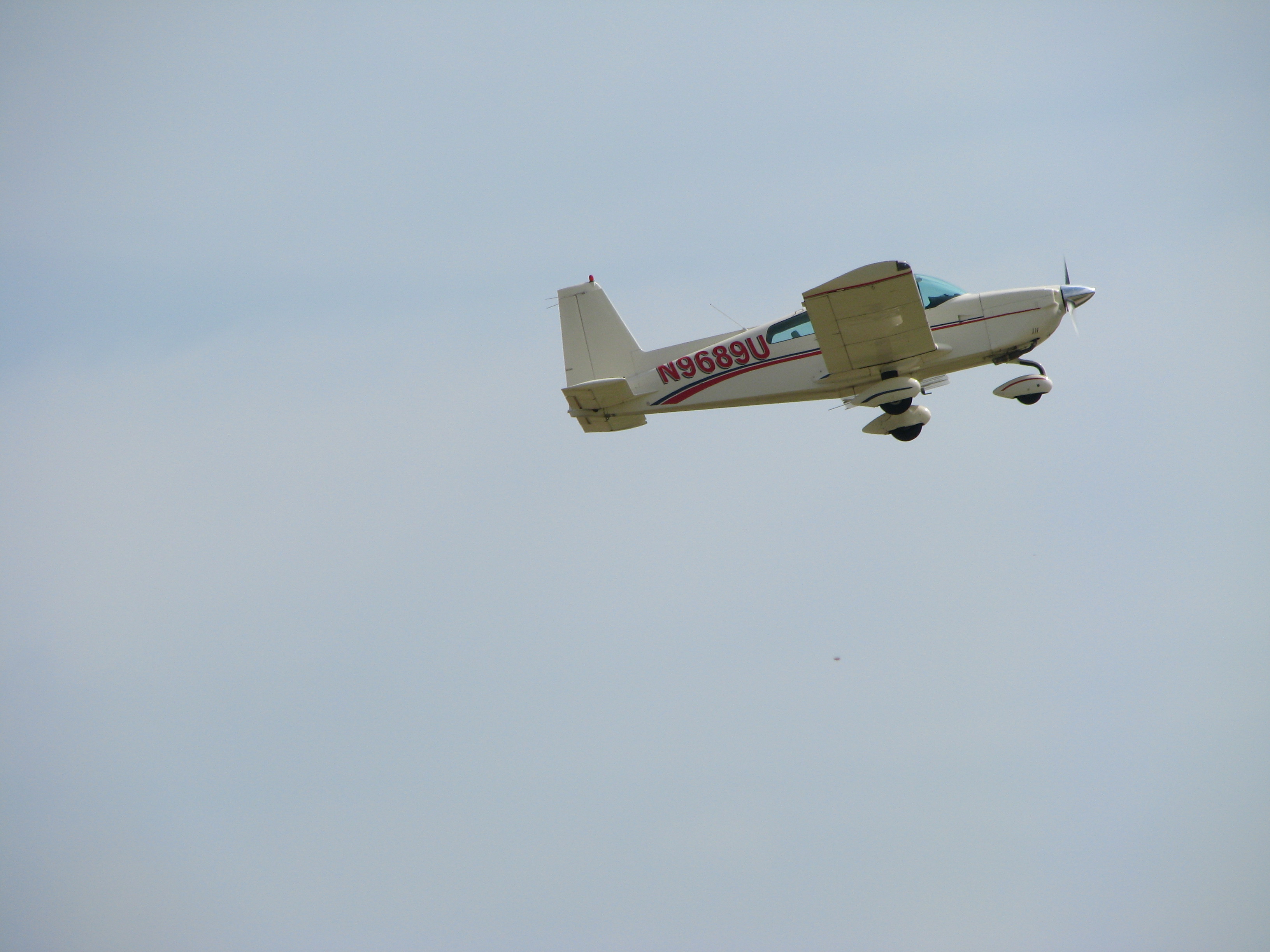
 

This is the plane I’m flying. One thing I did learn. This is more fun than I ever thought it would be. Just don’t tell my husband. He might take his hands off the control wheel sometime. And that would not be good.

  http://blog.aopa.org/flighttraining/?p=178

Hurt again?

Two mean women in jail demanded that the young, newly incarcerated girl provide them cigarettes and spend her own money to purchase their snacks and shampoo. Weeks later, the young girl found the courage to resist and so refused their demands. They beat her up. She had the black eye to prove it.

Counseling women in the Oklahoma County Jail is not always easy. What should this girl do now? Or rather, how should we react when someone mistreats us? Steals our property? Talks bad about us? Hurts us? Do we curse, find a way to retaliate or hate them? What do we do with the anger?

“Compassion is the emotion most frequently attributed to Jesus,” Paul Miller states in his book, Love Walked Among Us.  “Jesus’ command to love your enemies takes the energy out of bitterness. Instead of plotting revenge, we plan how to do them good.… Love always moves people to restore relationships.”

 Compassion in the face of hardship is never easy. Forgiving or “letting go” of painful incidents or difficult people may not be simple. It takes more than mere repetition of words like, “I forgive. I forgive.”

Anger can change to sadness or pity like the way Jesus looks at us when we behave our worst. Jesus taught compassion in Matthew 18:33: “Don’t you think you should show pity to someone else, as I did to you?” (CEV)

When a person is mean-spirited, we don’t know their past heartaches, what they’re running from, or even why they do what they do. But we can feel sorry for them because they cannot experience joy and bitterness at the same time. And if they continue in their disgraceful behavior, their future looks as bleak as their past.

The incarcerated young girl above chose to release the pain. She forgave. And some weeks later, one of the mean-spirited women came to her, asking for understanding and godly advice!

Compassion triumphs over hate—any day.

Emotions! Are they out of control?

We scream, cry and punch each other, but then hey, aren’t we created as emotional beings? Or do emotions just make us weak?  I think we are stronger because of our emotions, or at least we can be if we look at them.

How is that? Emotions reveal what’s going on inside us, our responses to life. No secret here. When Mama’s mad, everyone knows it. In truth, sometimes we overreact, but that’s where the benefit comes in. When we blow up, we have an opportunity to investigate why. Why did we throw dishes at our spouse when he or she came home a few minutes late? Are we just out-of-control or psychotic? Maybe it isn’t all the other person’s fault. Ever thought of that? Maybe we’re reacting to something deep inside  ourselves, dragging up feelings from far back in the past.

Ah-ha. Now comes the real opportunity. If we take time to examine what set us off, what caused the anger, anxiety, fear, and so forth, then we can address the real, deeper issues that bother us. Delve into our minds to discover an explanation for why we responded the way we did. Slow down and examine our thoughts. Search past the hurts and wrong beliefs. Resolve issues that keep popping up. Ask God for more understanding.

 That’s what will make us stronger. When our emotions are on the surface, we have a greater opportunity to examine our lives. Sometimes we have to wade through suppressed pain, confusing situations, or “I’m bad” defenses before allowing ourselves to look deeper into the whys. But it’s worth it. It takes courage to look closely at emotions, but they can reveal our true beliefs and with God’s help and understanding, we can become stronger in the end.

 For nothing is secret that will not be revealed, nor anything hidden that will not be known and come to light. (Luke 8:17 NKJ)

Days of Anguish

Chaplain Taylor, captured  with thousands of troops in the Phillipines, survived the Death March to Manilla Bay and endured a WWII Japanese POW camp. Between adversities such as seeing thousands of men die, spending time in solitary confinement, a heat box, and near starvation, his greatest desire was to give hope to others.

He lived out Colonel Oliver’s words spoken to the imprisoned men.

“Now, men, I want to talk to you for a while about forgiveness. There are two kinds, you know–when God forgives us, and when we forgive others. If we are to find true peace with God we must forgive, even as we are forgiven.”

“If we fail to forgive, then hatred can become a poison in our veins that will mark us until the day of judgment and bring spiritual death an inch at a time. But if we learn to forgive, we can find peace with God. May God help us all to learn to forgive.”

If Chaplain Taylor, who experienced these kind of hardships, can forgive, why can’t we?

Taken from Days of Anguish, Days of Hope by Billy Keith