Share With Family

Mom rode with me on one of those long trips that take hours–when good conversation helps pass the time.  In the intimacy of my front car seat, Mom shared about the faith she learned from her mother.

“Your grandma taught WMU, women’s missionary groups, for years. She was passionate about spreading the good news of Christ.  I still have boxes full of her handwritten lessons and tons of articles and quotes she cut out about missions. When I was a child, I went with her to meetings and sat in a corner and listened.”

Mom continued. These stories about my deceased grandmother were new to me. 

“I remember a neighbor she kept inviting to the meetings. Finally the woman came one day just so mother would quit asking. But the lady was interested and kept coming back. Soon she came to church and brought her children, one of them my age.  Then her husband came and got involved. Last I heard, their family is still going to that little old church, still working there. All because Mother kept inviting her.”My sweet mother.
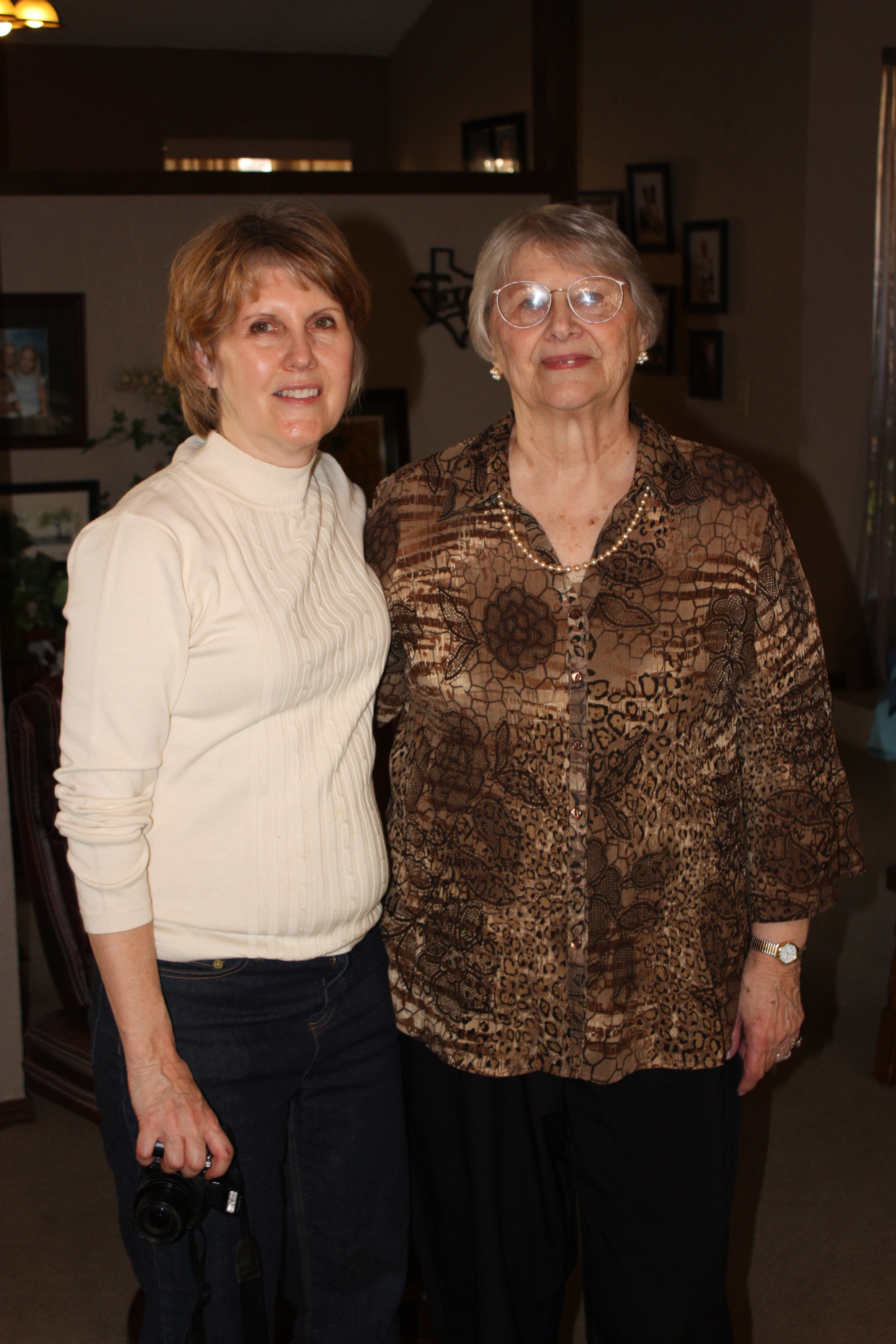
Mom went on to tell how her own grandmother shared her faith, a dedicated woman who rode side saddle on a horse through the country side to collect money for a women’s dormitory at Oklahoma Baptist University, the local Christian college in Shawnee.

These ancestors of mine had faith, and as my mom shared, I realized that her sharing provided a connection to the strong Christian women in my past. Their stories encouraged my Christian walk through life.

From words shared in that long car ride, I now have more stories of faith to give my family. By passing down and transferring these bits of facts to my own children and grandchildren, I pass on the faith of generations behind me. 

Remember to share your faith with family. It can give encouragement that will continue forever.

The LORD said to Jehu, “Because you have done well in accomplishing what is right in my eyes . . .  your descendants will sit on the throne of Israel to the fourth generation.” 2 Kings 10:30 (NIV)

By Kathryn Spurgeon. First published in a HHBC  pamphlet.
Book sent to Agent

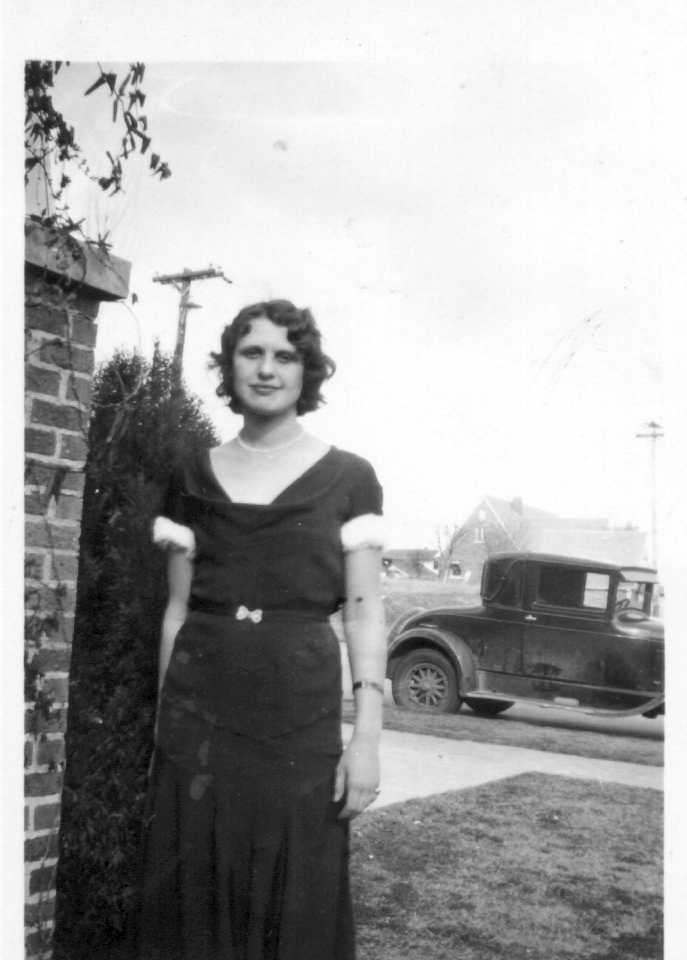
I re-edited my first novel, Up Town, and sent it off to be considered for publication! Yeah! Okay, I’ve been working on this for years, and gleaned information from many sources including enlivening fodder from my great Aunt Blanche. See her website at www.blanchetrimble.wordpress.com.

However, the summary is harder than writing the book, so any advise is appreciated.

Sibyl Trimble, daughter of a wealthy banker during the Great Depression, wants to help the poor, but when she falls in love with a hobo, gets pregnant and must marry, she find herself in the poverty she wanted to alleviate. Despair threatens until she learns that God is greater than her dreams, and her marriage was what she wanted all along.

Up Town is a 1930’s historical novel, the first in a series of historical novels. The proposal for Up Town won 3rd place in Historical Romance in the Oklahoma Writers Federation contest and is approximately 97,000 words in length.

My agent, Les Stobbe, has been great to come up with ideas and is sending the manuscript off to several editors. Please pray with me for God’s hand to be with Up Town.

Am I Willing to Give Up Myself?

I believe. I believe. We say it like a mantra when we desperately want something to happen. I said it when I was a child.  I believed my father would become a Christian. For years, as I spoke to the starlit, country sky, I was certain it was God’s will for our family.

Our parents were divided over most things, like having friends over for dinner. Daddy didn’t want company, while Mama was outgoing and thrived on conversations. Daddy  worked in the field with the cattle; Mama read books voraciously. Daddy bailed hay on Sundays; Mama went to church. I thought Daddy’s salvation would solve all of their problems and consequently mine.

My parents divorced when I was 17 years old and my faith took a nosedive. My trust in God plummeted. If God had not heard my life-long, heart-felt prayer, how could I trust him? Did I not believe enough? Not have enough faith in God? What went wrong?

I struggled with this concept for years. If a child lays ill with a fever, is God obligated to heal him if I have enough faith? If my grandmother goes to the emergency room with a heart attack, will my prayers be effective? Will my believing be enough to heal her? If a little girl in Africa needs food, will God give her nourishment if I earnestly pray and believe?

Is my belief the key? Is my weakness or unbelief the cause of heartache and inaction on God’s part? Those may be questions we all wonder about.

One of the keys may be the belief part. What do we put our belief in?  Do we trust in God or in our belief? Perhaps it’s like a test.

If God did not restore my parents’ marriage would I still believe in Him? Believe that He is in total control.  God is not obligated to hear our prayer or act on our prayers.  He does however, listen to our hearts.

My prayer as a child was self-centered.  I wanted my world fixed, to be better, improved. I wanted my parents to stay together, to be happy. Was this a bad prayer, a wrong belief?  No, marriages are sanctified, vitally important to God, but my focus was wrong. I prayed for the wrong reason.  I prayed for myself. And yes, I thought about my father and his eternal life, but that was not the primary motivation for my prayer.

God searches our hearts, and if our prayer does not relinquish all control to Him, maybe we fail the test. If we believe our own prayers can persuade God to act, then we have not relinquished control. For example, if we are ill and do not get better and must go to the hospital, are we angry at God for not healing us? 

We like having control. But we have to trust in God and His wisdom and might, not in our prayers and our belief.

Does God want what is best for us? Most certainly.  But God and I may differ in what is best. I may believe health is essential. God may differ. He may see a larger picture or a bigger plan.  He is in a battle for the souls of the world, a bigger job than health.  If better health can help in the battle, bring people closer to God, then God will heal. Inversely, if a death will touch many lives, promote spiritual strength and enlightenment, then God may allow a death.  Do we believe in God enough to allow him to do whatever He chooses? Are we willing to give ourselves up to God? Do we choose God or do we choose ourselves?

For I consider that the sufferings of this present time are not worthy to be compared with the glory which shall be revealed in us. Romans 8:18

Praise Him.

The quickest way to meet God is through praise. When we thank Him even in our difficulties, we give up something–our human desire to understand everything and our need to control the circumstances around us. 

The Bible gives many illustrations of praise being an attitude that changes tragic events into great events. For example, look at Paul and Silas. (Acts 16:19-40).  They sang hymns and praised God while they were in jail, before they knew what was going to happen!  Anything but praise attributes more power to someone or something other than to God.

In unhappy or disastrous situations, God steps into our lives when we thank Him for the situation itself.   Mostly, He changes us on the inside, changes our understanding of life.

It’s like looking at a negative of a photograph; the image looks backwards.  The black looks white and the white looks black. We don’t understand.  To develop the photograph, the negative is plunged into the developing solution.  It becomes clearer and more correct. Darkness turns to light and the result is a truer picture. 

When we praise God by an act of choice, by our own free will, we accept the present circumstances and take a positive position.  By beginning to thank God even in hard times, we take our less-than-good situation and plunge it into the photographer’s fluid, which is the Presence of God.  We may not see the results right away, but as we praise God and wait, we will meet Him.

Written after reading one of Catherine Marshall’s book